Microsoft Always On Vpn For Mac
- Microsoft Always On Vpn For Mac Computer
- Microsoft Always On Vpn For Mac Download
- Microsoft Always On Vpn Mac Os
- Best Vpn For Mac
- Download Vpn On Mac
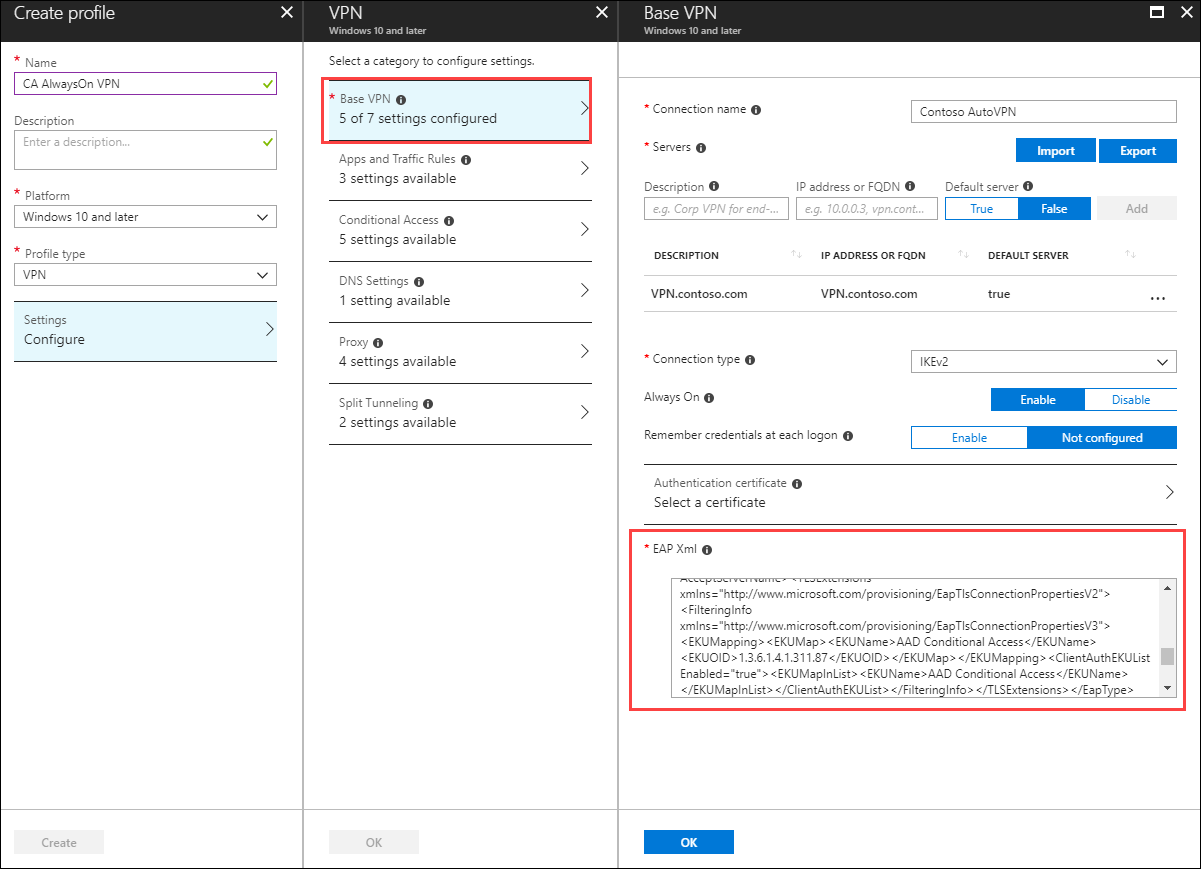
A new feature of the Windows 10 VPN client, Always On, is the ability to maintain a VPN connection. With Always On, the active VPN profile can connect automatically and remain connected based on triggers, such as user sign-in, network state change, or device screen active.
You can use gateways with Windows 10 Always On to establish persistent user tunnels and device tunnels to Azure. This article helps you configure an Always On VPN user tunnel.
Always On VPN connections include either of two types of tunnels:
Apr 03, 2020 Got a problem with your Mac? Try these simple troubleshooting steps. Got a Mac that's misbehaving and not doing what you expect it to do? Here are some simple things you can try. May 01, 2018 Windows 10 Always On VPN is the replacement for Microsoft’s DirectAccess remote access technology. Always On VPN aims to address several shortcomings of DirectAccess, including support for Windows 10 Professional and non-domain joined devices, as well as cloud integration with Intune and Azure Active Directory. Jun 18, 2019 Click the plus sign button at the bottom left corner of the window and select “VPN” in the Interface box. Choose the type of VPN server you need to connect to in the “VPN Type” box and enter a name that will help you identify it. Like other operating systems, Mac OS X doesn’t include built-in support for OpenVPN networks. Connect your Mac to a VPN. You can use Network preferences to connect to a virtual private network (VPN) on an existing internet connection. On your Mac, choose Apple menu System Preferences, then click Network. Open Network preferences for me. Select your VPN service in the list at the left. What is Microsoft Always On VPN? Microsoft’s Always On VPN is the revamp of DirectAccess remote access technology seeking to overcome the limitations of DirectAccess and achieve much wider adoption. With the new Always On VPN technology, Microsoft is looking to achieve a single solution of remote access that supports a wide array of clients. A new feature of the Windows 10 VPN client, Always On, is the ability to maintain a VPN connection. With Always On, the active VPN profile can connect automatically and remain connected based on triggers, such as user sign-in, network state change, or device screen active. You can use gateways with.
Device tunnel: Connects to specified VPN servers before users sign in to the device. Pre-sign-in connectivity scenarios and device management use a device tunnel.
User tunnel: Connects only after users sign in to the device. By using user tunnels, you can access organization resources through VPN servers.
Device tunnels and user tunnels operate independent of their VPN profiles. They can be connected at the same time, and they can use different authentication methods and other VPN configuration settings, as appropriate.
Configure the gateway
Configure the VPN gateway to use IKEv2 and certificate-based authentication using the Configure a Point-to-Site VPN connection article.
Configure the device tunnel
The following requirements must be met in order to successfully establish a device tunnel:
Microsoft Always On Vpn For Mac Computer
- The device must be a domain joined computer running Windows 10 Enterprise or Education version 1809 or later.
- The tunnel is only configurable for the Windows built-in VPN solution and is established using IKEv2 with computer certificate authentication.
- Only one device tunnel can be configured per device.

Microsoft Always On Vpn For Mac Download
- Install client certificates on the Windows 10 client using the point-to-site VPN client article. The certificate needs to be in the Local Machine store.
- Create a VPN Profile and configure device tunnel in the context of the LOCAL SYSTEM account using these instructions.
Configuration example for device tunnel
Microsoft Always On Vpn Mac Os
After you have configured the virtual network gateway and installed the client certificate in the Local Machine store on the Windows 10 client, use the following examples to configure a client device tunnel:
Copy the following text and save it as devicecert.ps1.
Copy the following text and save it as VPNProfile.xml in the same folder as devicecert.ps1. Edit the following text to match your environment.
<Servers>azuregateway-1234-56-78dc.cloudapp.net</Servers> <= Can be found in the VpnSettings.xml in the downloaded profile zip file<Address>192.168.3.5</Address> <= IP of resource in the vnet or the vnet address space<Address>192.168.3.4</Address> <= IP of resource in the vnet or the vnet address space
Download PsExec from Sysinternals and extract the files to C:PSTools.
From an Admin CMD prompt, launch PowerShell by running:
In PowerShell, switch to the folder where devicecert.ps1 and VPNProfile.xml are located, and run the following command:
Run rasphone.
Look for the MachineCertTest entry and click Connect.
Does mac os x 10.6 support microsoft office. This article tells you how. Note: Office 2016 for Mac for Office 365 operated by 21Vianet is not offered through the Apple store. RequirementsTo use Office for Mac 2016, you must have:.Mac OS X 10.10 or later.One of the following subscriptions:.Office 365 Enterprise E3.Office 365 Business.Office 365 Business Premium.Office 365 ProPlus.Office 365 ProPlus for Students.Office 365 ProPlus for Faculty.Office 365 Midsize Business.Office 365 Small Business Premium. Note: This article applies only to Office 365 operated by 21Vianet in China.Ready to install Office 2016 for Mac for Office 365?
If the connection succeeds, reboot the computer. The tunnel will connect automatically.
Best Vpn For Mac
To remove a profile
To remove the profile, run the following command:
Download Vpn On Mac
Next steps
For troubleshooting, see Azure point-to-site connection problems
Use the official Fonts distributed by Microsoft. Open Finder and go to the Applications Folder ( SHIFT + CMD + A ) Locate MS Word or MS Excel or MS PowerPoint. Right-click and select Show Package Content. In Finder navigate through Contents/Resources/Fonts. You will see all the installed MS Fonts. Nov 22, 2017 Right click on any Office app Show Package Contents Contents Resources and you should find various font folders in each app. Where are microsoft word fonts stored on mac. Microsoft Office fonts in /Library/Fonts/Microsoft (ahhh I see) ONLY TTF fonts work for Office – or so MS claims; To install fonts for MS Office 2011 – don’t double click them – this installs them naturally in the user fonts instead – start up Font Book (use the spotlight or magnifying glass to find it quick in the upper right of your Mac). Because fonts work with the operating system, they are not downloaded to Office directly. You should go through the system's Fonts folder in Windows Control Panel and the font will work with Office automatically. On the Mac you use the Font Book to add the font and then copy it to the Windows Office Compatible folder. To resolve multiple version of fonts and make the latest version active. If Font Book application is already open, quit it. Launch Font Book (open applications folder in Finder, find and launch 'Font book.app') Select All Fonts from the leftmost pane. Select the Font Info button (inscribed “i”) from.